Introduction
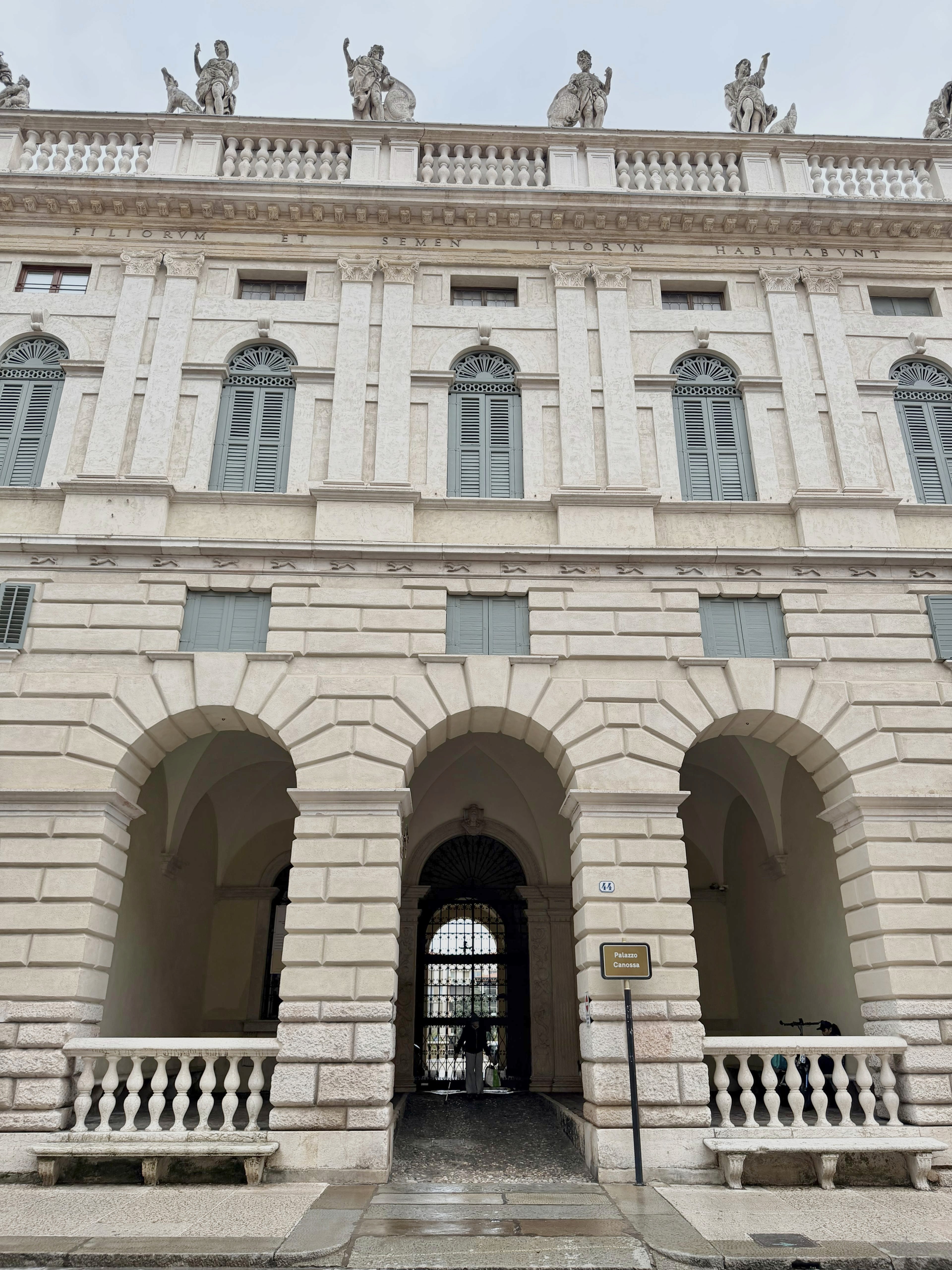
The intervention is set within Palazzo Canossa, a historic building located in the heart of Verona and overlooking the Adige River, bearing witness to the prestige of one of the city’s most prominent noble families. The palace, originally dating back to the 16th century, has undergone a careful restoration aimed at preserving its original architectural layout and historic character.
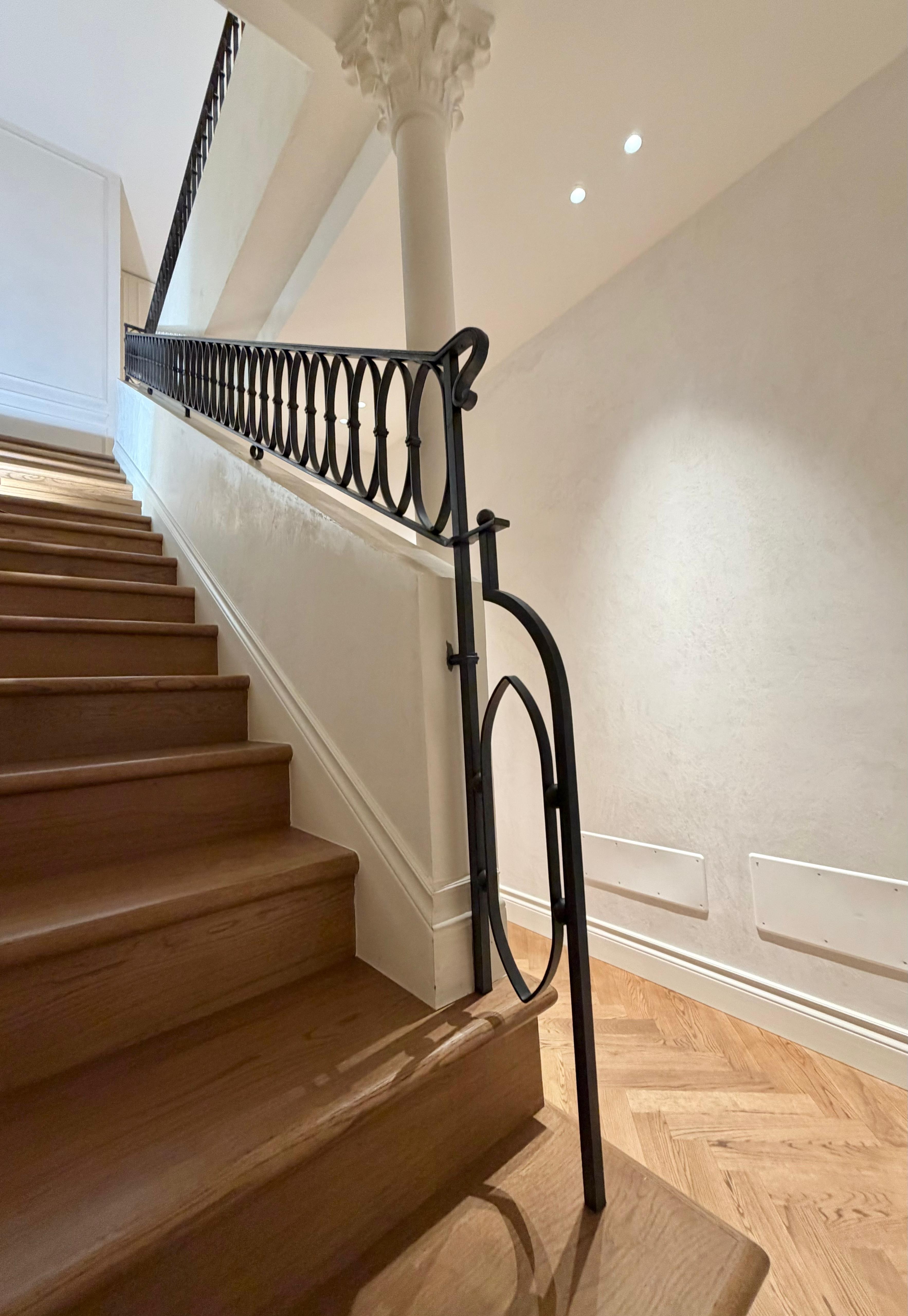
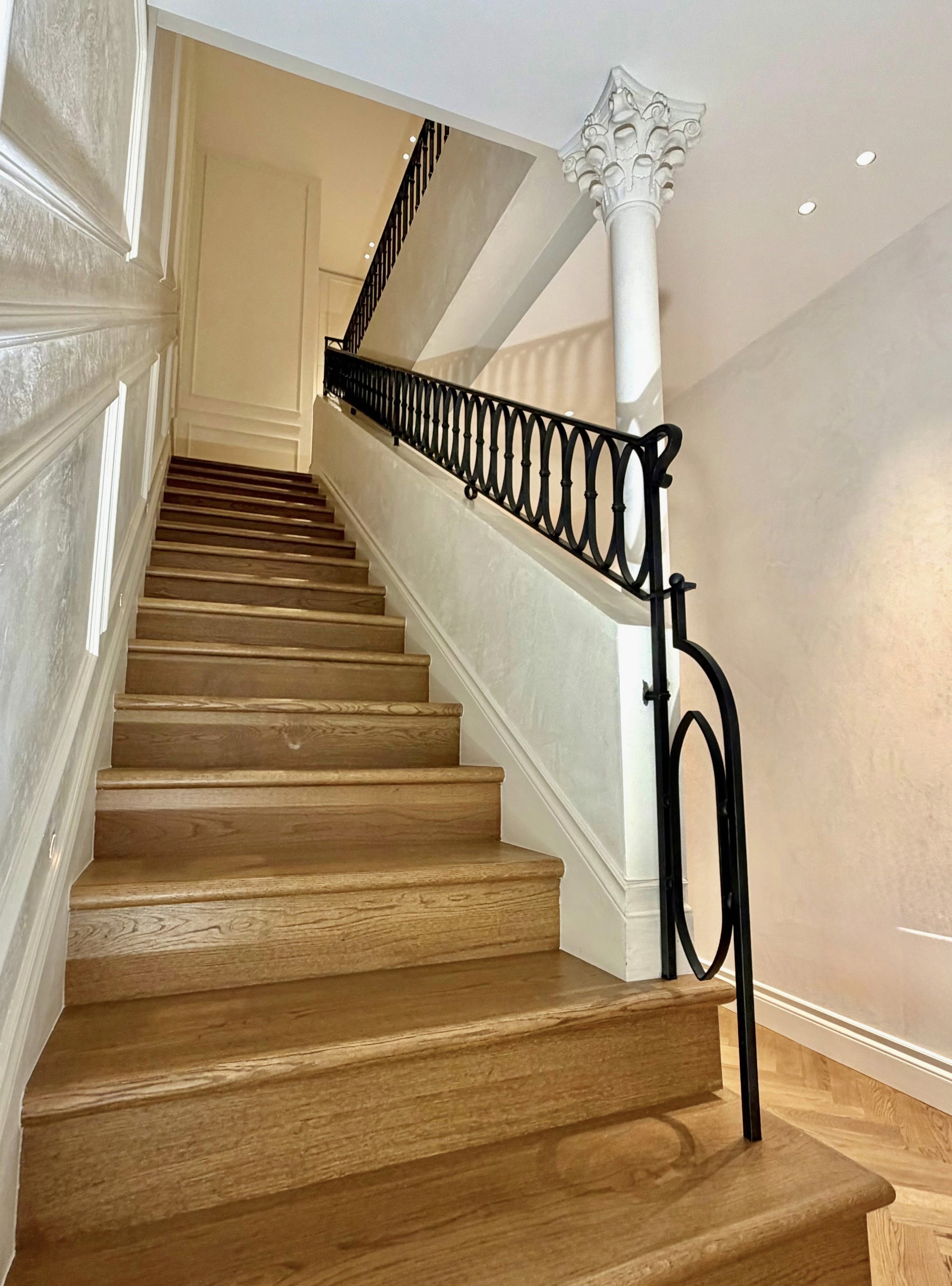
Inside, a two-flight staircase represents one of the key architectural elements of the space. On the right-hand side, a low wall inspired by 18th-century architecture has been reconstructed, a typical feature of the period, likely referring to a later phase than the original construction of the palace.
Design
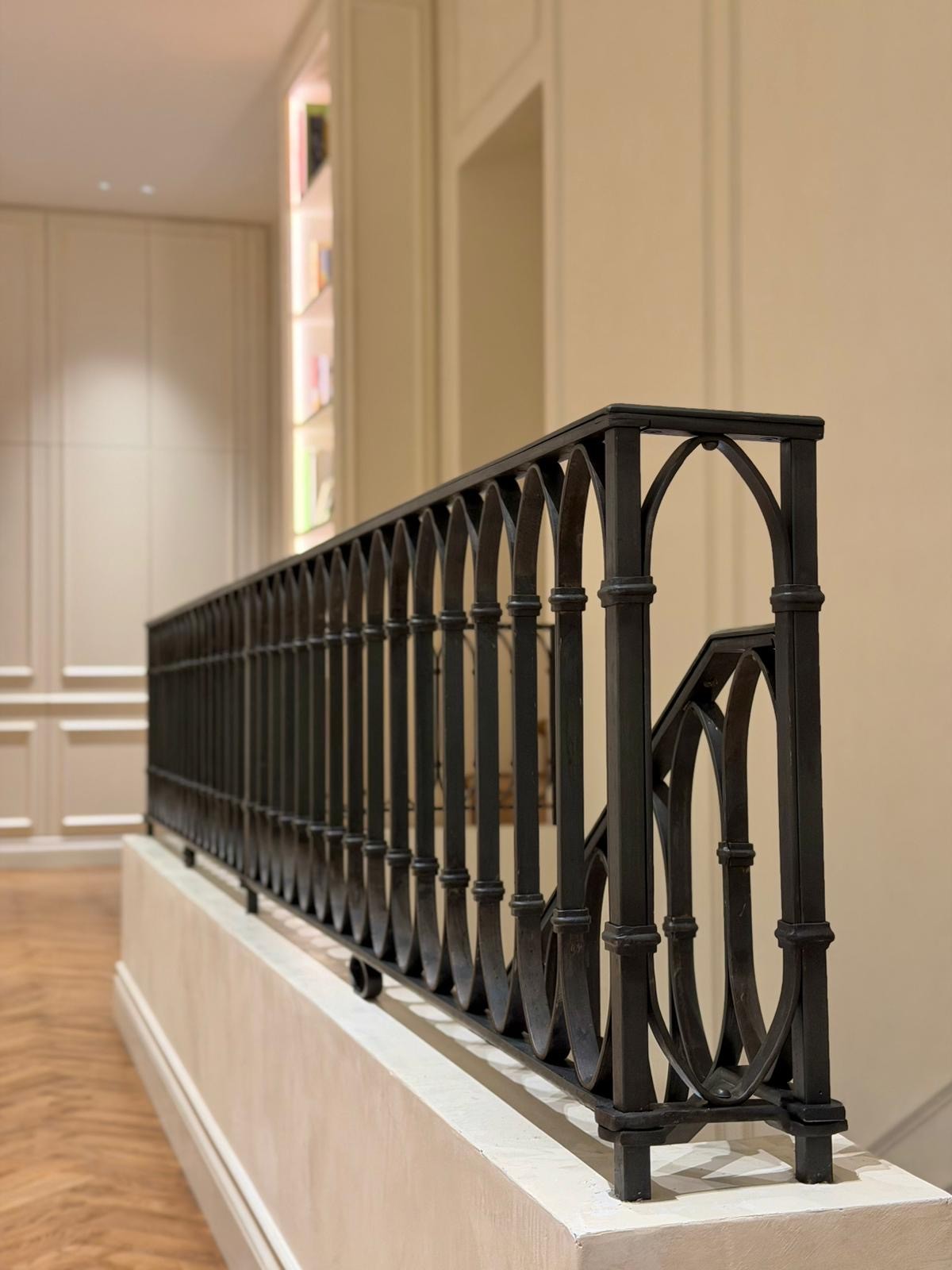
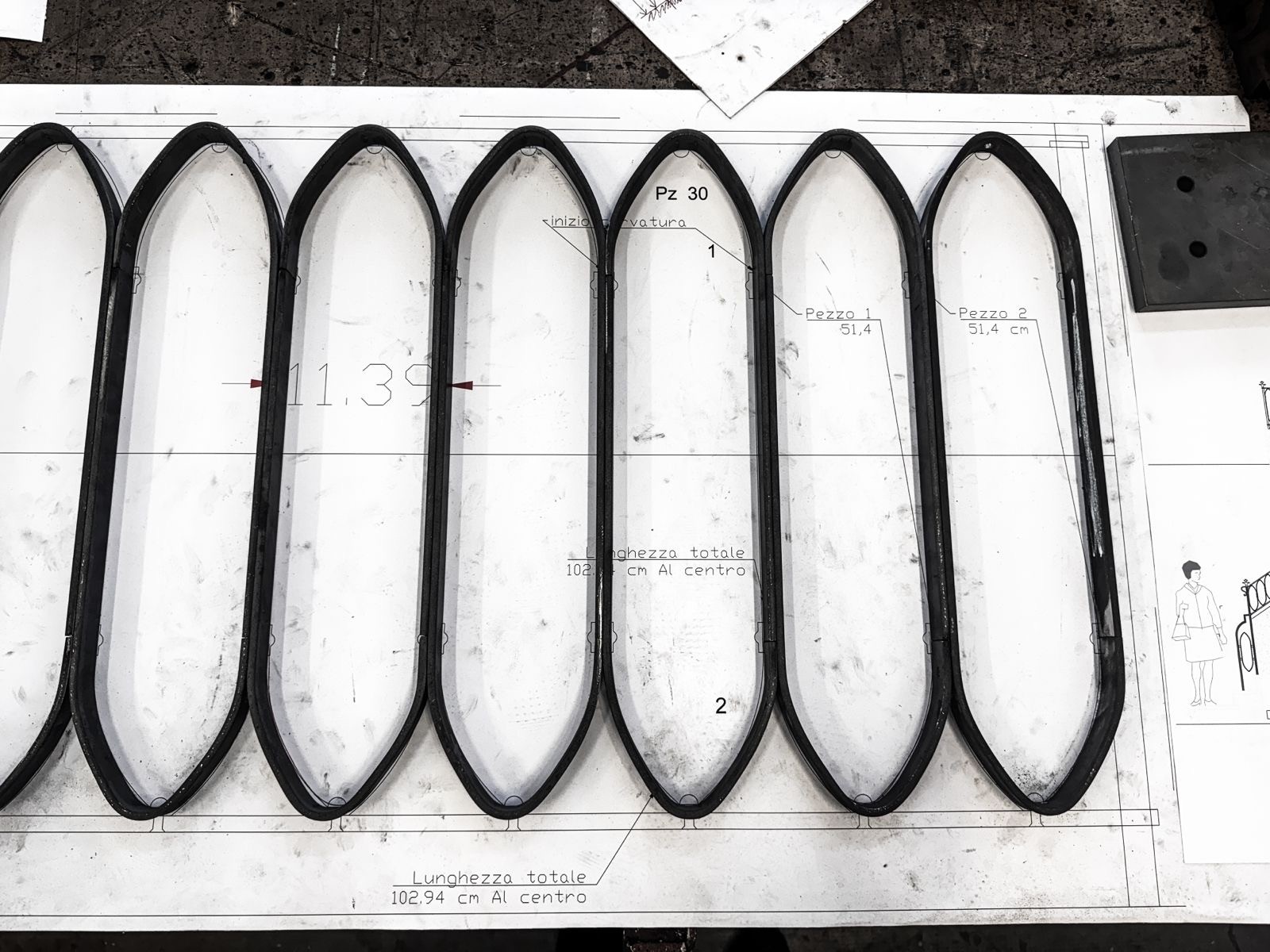
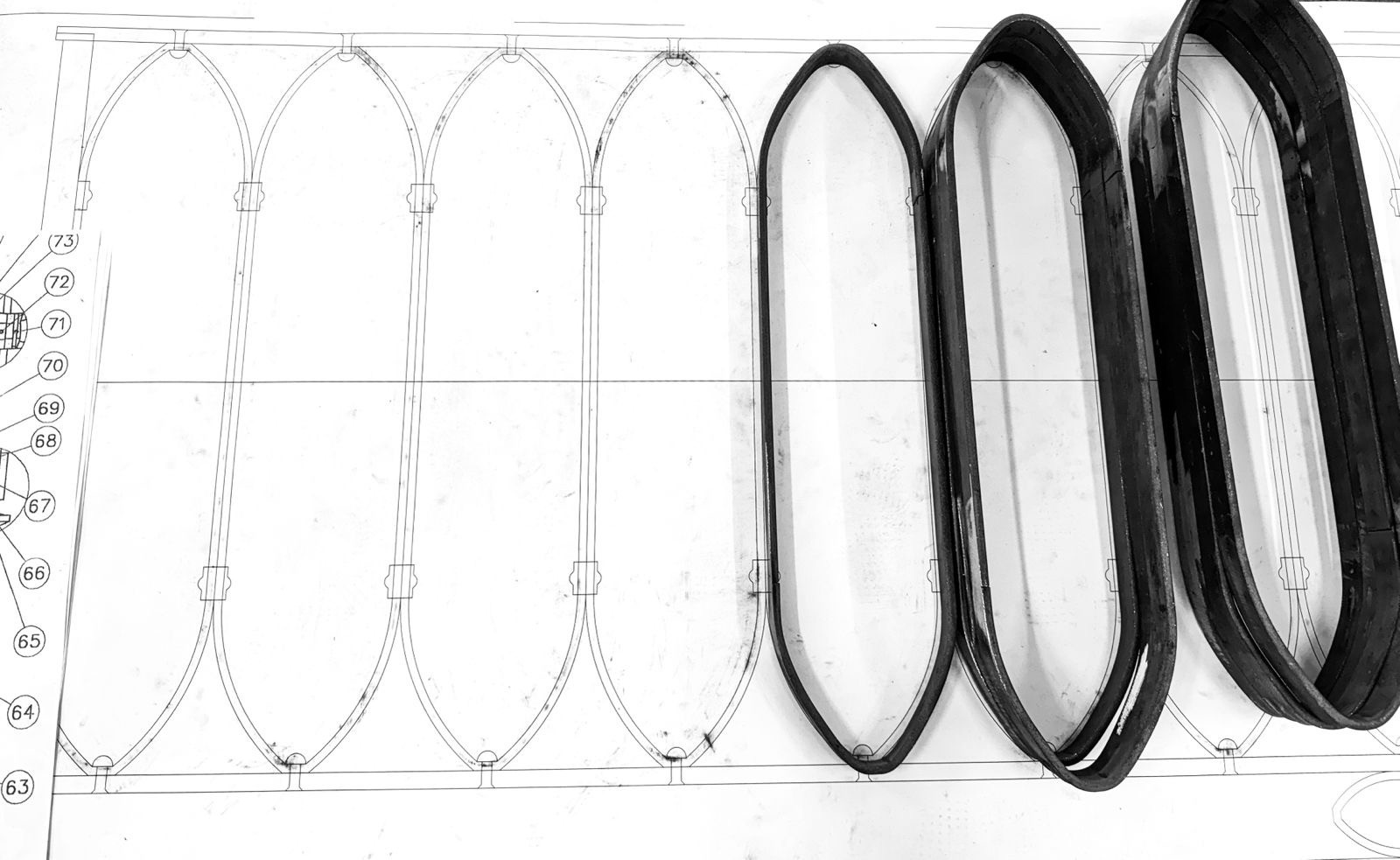
Within this context, a hand-forged wrought iron railing was designed, conceived to harmonize with the historic character of the building without overwhelming it. The design approach focused on achieving a light and refined aesthetic, enhancing the space while respecting the richness of the interiors, distinguished by exposed brickwork and frescoes.
"
Discreet elegance, where wrought iron enters into dialogue with history
Datail 1
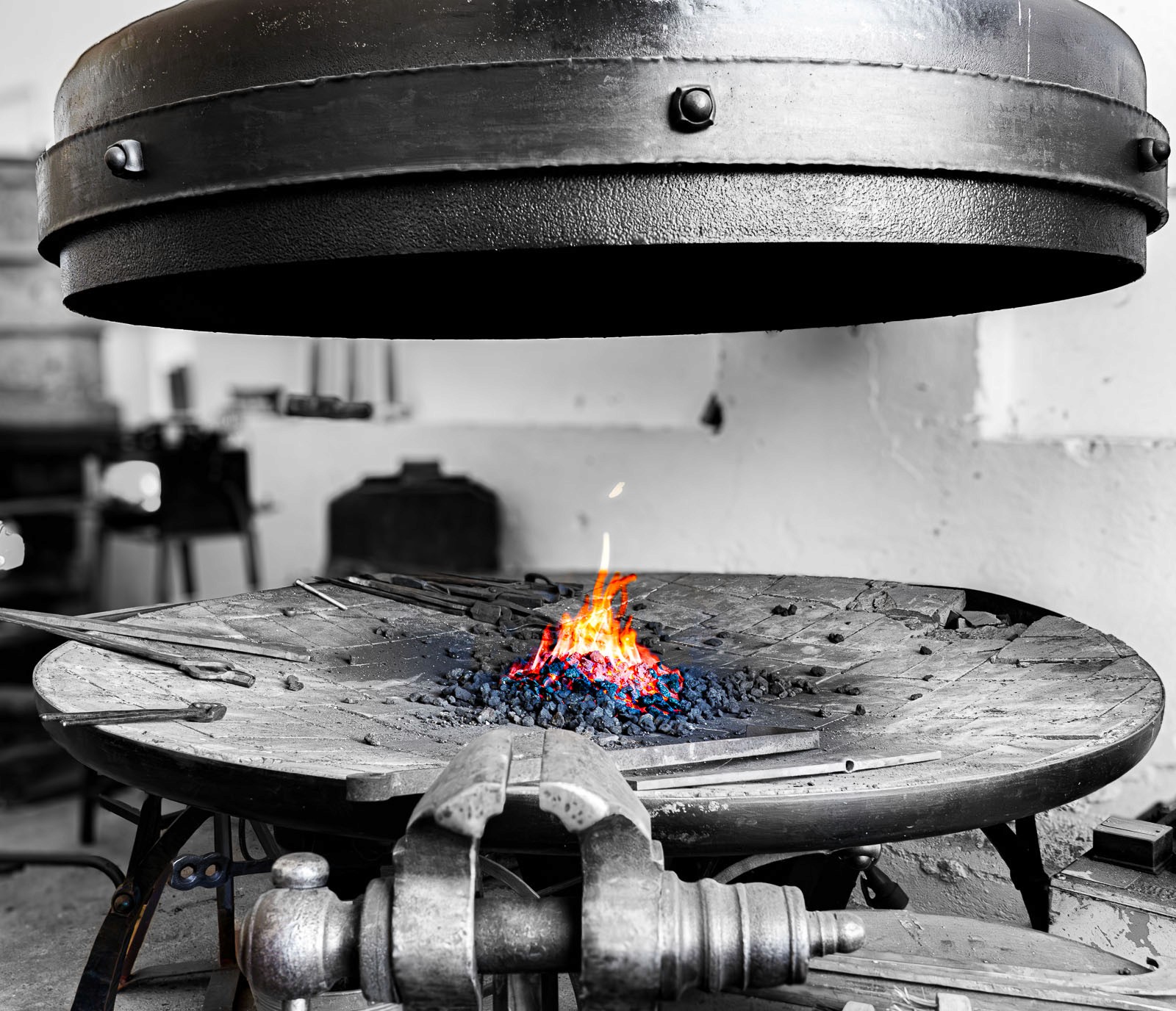
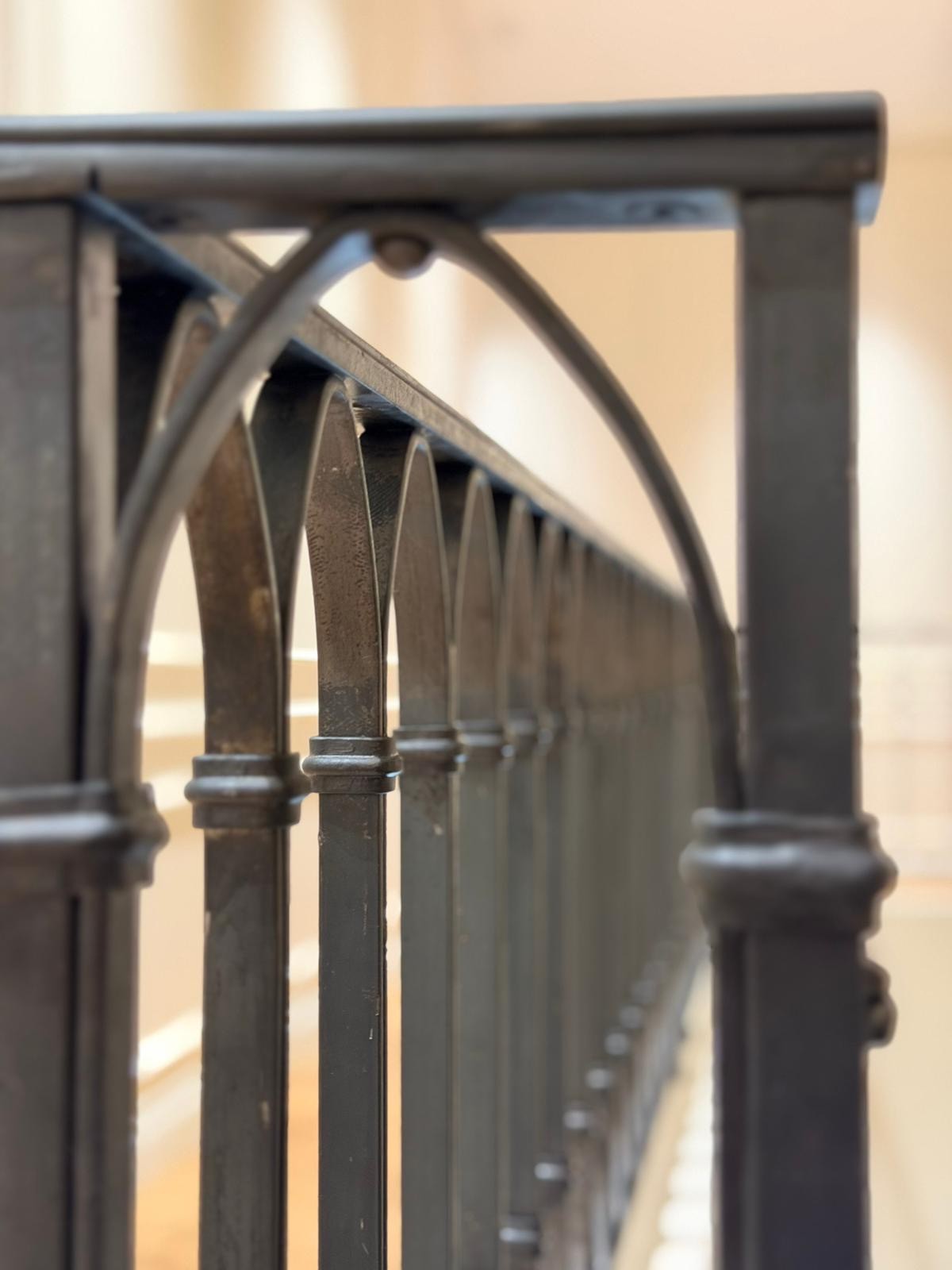
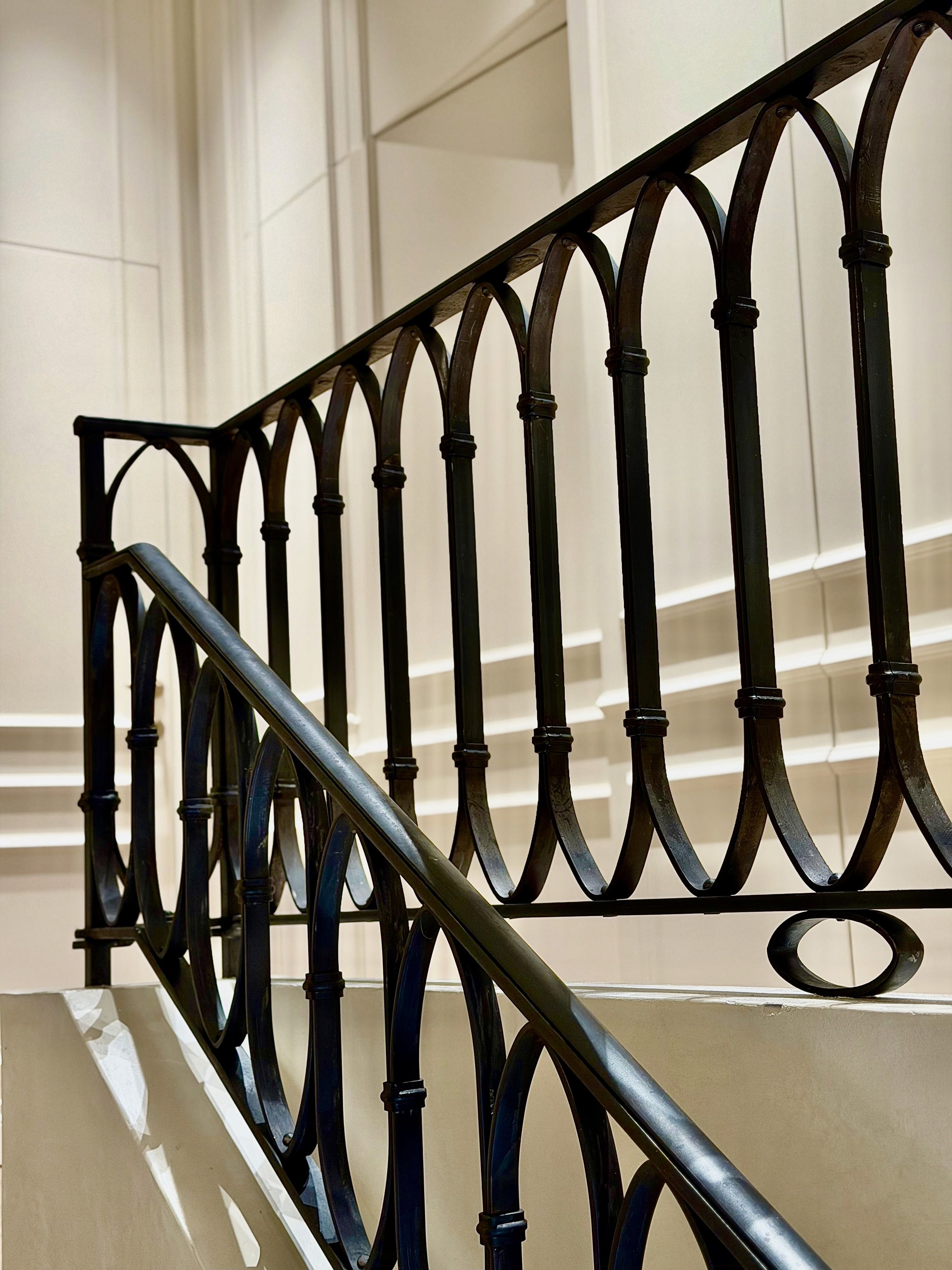
The classical craftsmanship of wrought iron is clearly visible, with elements assembled using hot-forged and wrapped collars. This traditional technique, historically employed to bind metal components together without welding, stands as a defining feature of authentic wrought iron work, expressing both structural integrity and respect for historical construction methods.
"
Discreet elegance, where wrought niron enters into dialogue with history
.
Detail 2
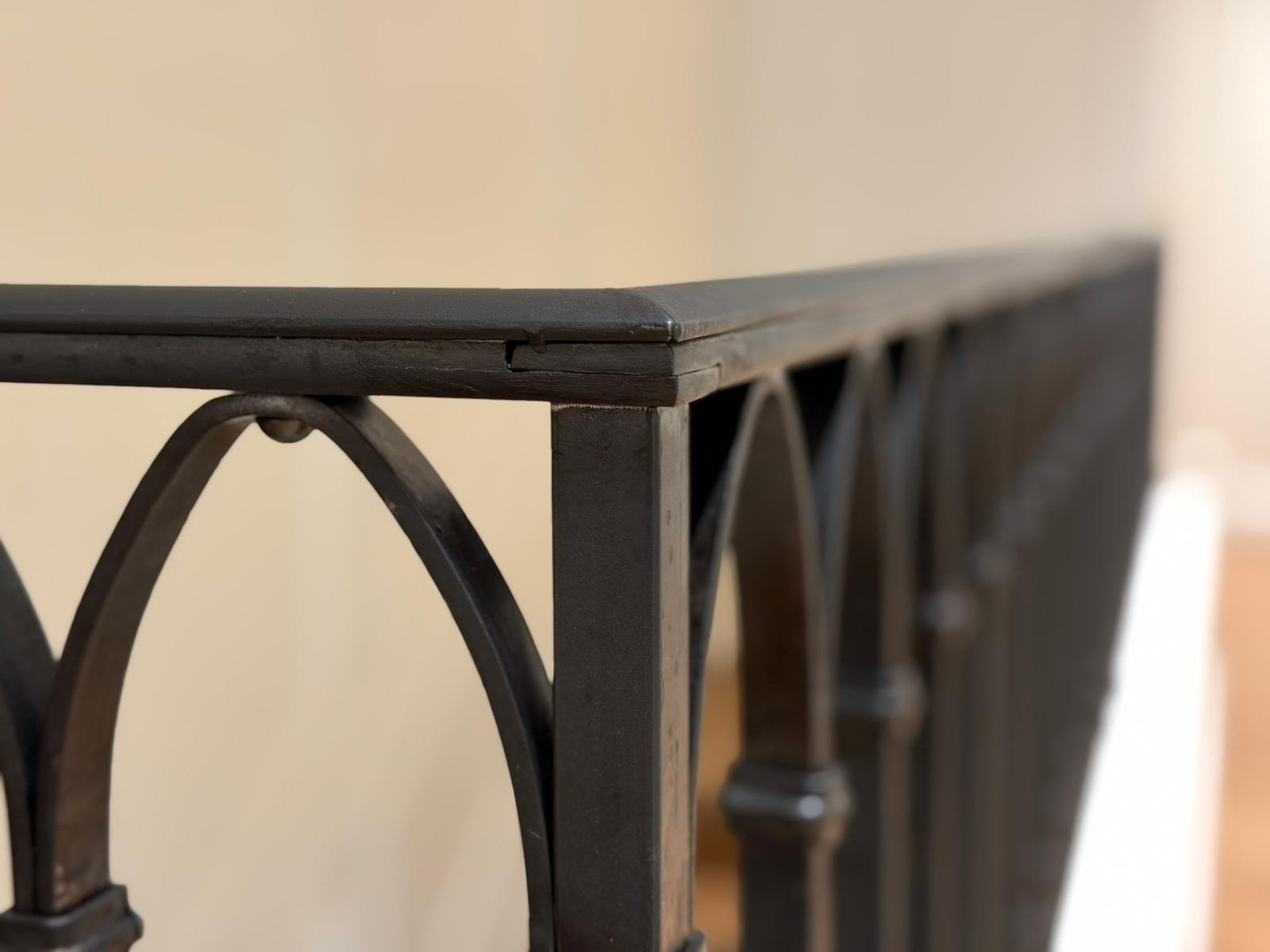
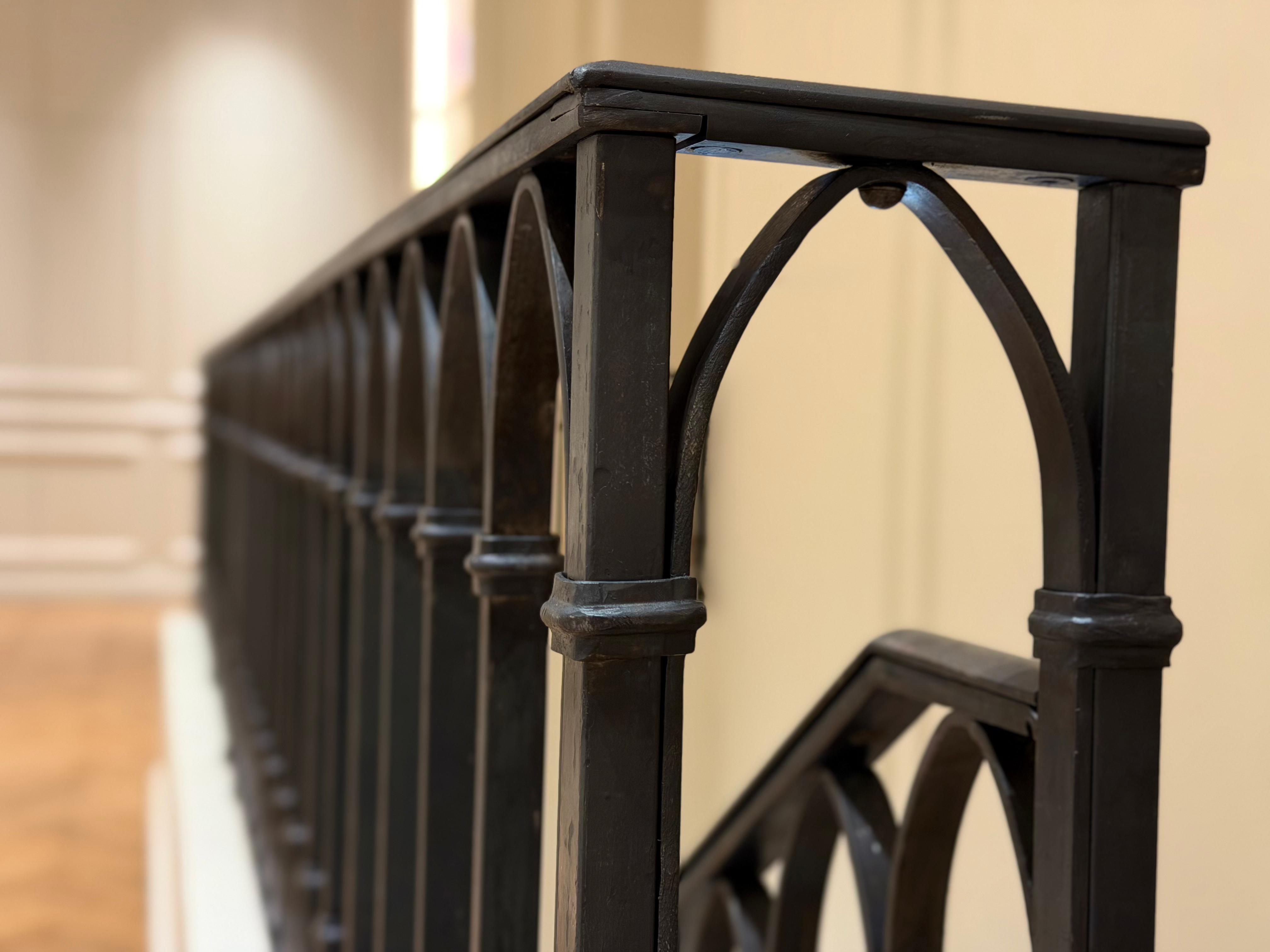
the elegance of a flat handrail layered over a half-round section, an ancient solution that combines structural strength with refined aesthetics. Of particular note is the starting point of the staircase, where a Gothic-inspired element has been reintroduced, giving prominence to the newel and ensuring visual coherence with the refined 18th-century architectural structure.
Finishes
The finish was carried out using a traditional method: the iron was heated to remove any residual internal moisture, after which melted natural beeswax was applied, allowing it to penetrate the surface and protect the material from oxidation. This technique not only ensures long-lasting protection but also enhances the material character of the iron, preserving its authentic and timeless appearance.
Conclusion
The final outcome is the result of a series of carefully calibrated decisions, often imperceptible at first glance yet essential to the overall balance of the work. The precise study of proportions and heights, combined with the use of traditional wrought iron techniques and meticulous attention to construction details, defines an intervention that feels both coherent and natural.
A distinctive feature of the project lies in the deliberate choice to lower the balustrade along the gallery, achieving more harmonious proportions in relation to the space and the staircase. This subtle design refinement creates a remarkable visual effect, resulting in a balustrade that does not appear as a contemporary addition, but rather as an element that seems to have always belonged to the house, seamlessly integrated into its architectural and historical context.